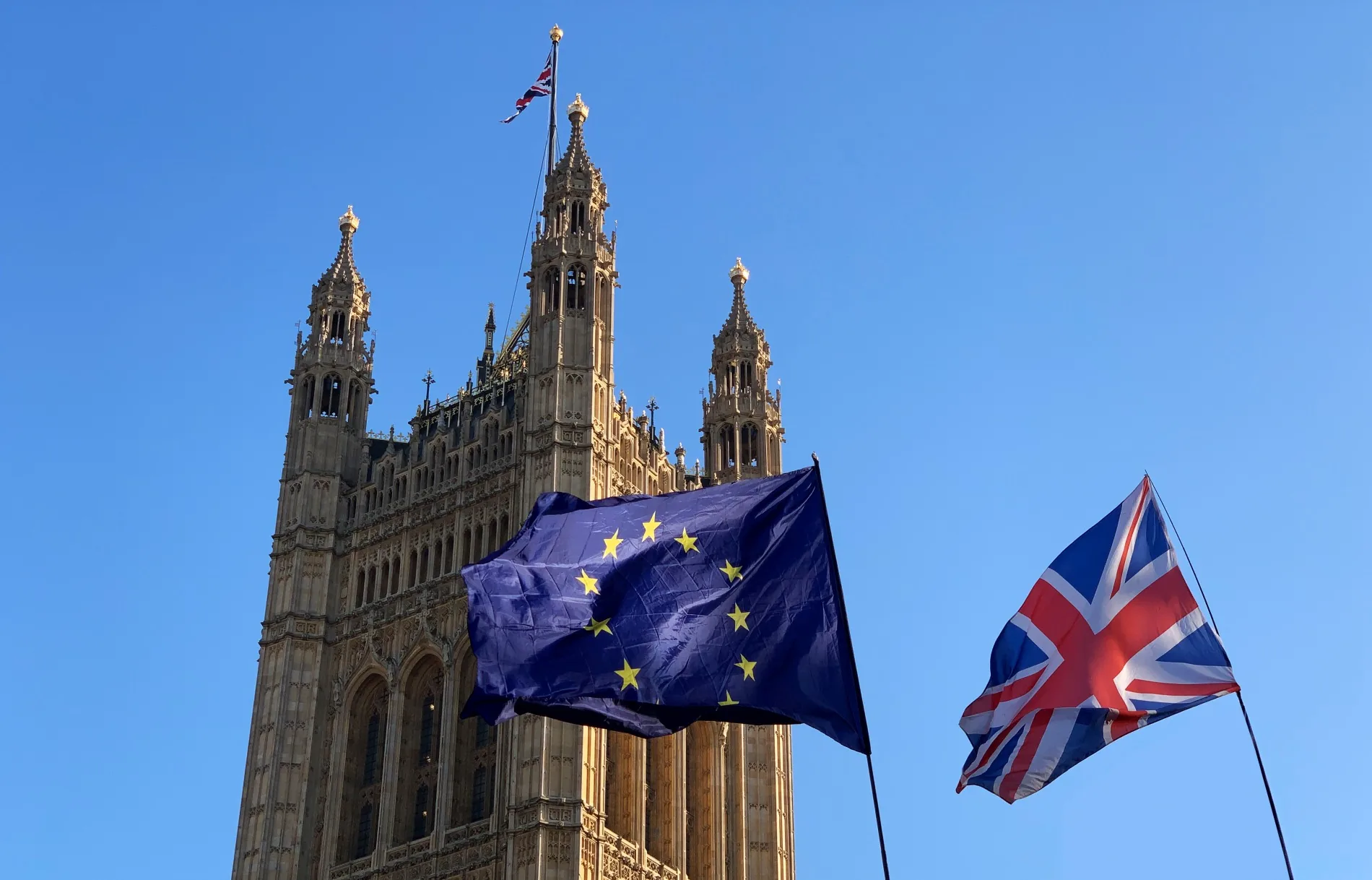
Is the UK rejoining the European Union? What it means for London property buyers
Featured Question
Is the UK rejoining the European Union?
Not for now. Prime Minister Andy Burnham said on 29 September 2026 that Brexit did "more harm than good", but the government has no plan for a membership application or a referendum. What is on the agenda is a set of deals on food trade, emissions trading and youth mobility at the Brussels summit on 20 November 2026. Full membership would need the unanimous agreement of all 27 EU member states, and that process takes years.
On 29 September 2026, speaking at the Labour Party conference in Liverpool, Prime Minister Andy Burnham said Brexit had done "more harm than good". A sitting prime minister saying that from the podium, in a country that voted to leave the EU a decade ago, made headlines well beyond Britain, and plenty of our overseas clients noticed. The question we keep hearing is the same every time: "Is the UK going back into the EU, and should I hold off on buying?" In this piece we set out what was actually said, what wasn't, and which numbers genuinely matter right now if you're thinking of buying in London, with dates and sources throughout.
The short answer: is the UK rejoining the EU?
Not for now, although the relationship is clearly warming. Burnham has said openly that Brexit did damage, and he makes no secret of wanting the UK back in the EU eventually, but there is no membership application or fresh referendum on the government's table. The concrete next step is the UK-EU summit in Brussels on 20 November 2026.
Here is the picture in brief:
- What's been said: Brexit did "more harm than good" (Burnham, 29 September 2026).
- What's planned: the Brussels summit on 20 November 2026. On the agenda are food and agricultural trade, emissions trading, a youth mobility scheme and cooperation on migration.
- What isn't planned: an EU membership application, a new referendum, or any timetable for rejoining the single market or the customs union.
- What changes for buyers today: no tax or purchasing rules at all. Stamp duty rules for overseas buyers are exactly as they were.
What exactly did Andy Burnham say, and when?
Burnham's clearest line on Brexit came on Tuesday 29 September 2026 at the Labour conference in Liverpool. According to reports from RTÉ and Euronews published that same day, he said Brexit had done more harm than good and that the UK needed to decide on its long-term relationship with its biggest market. In the same speech he argued that Brexit had not delivered the control the country was promised.
A quick note: many people still remember Burnham as Mayor of Greater Manchester. According to RTÉ, he has been UK Prime Minister since 20 July 2026. So this isn't a regional mayor's opinion. It's the view of the head of government.
There have been more recent comments too. At the European Political Community summit in Dublin on 12 November 2026, Burnham said a deal with the EU could be a win for both sides. HuffPost UK reported on 13 November that he wants the UK to rejoin the EU "within my lifetime" but would leave that decision to the public, and that when pressed on a concrete plan he stressed the need to move step by step. The same report says Burnham claims the food standards and emissions trading agreements could add 0.4 per cent to the economy. That figure is the government's own claim, not an independent forecast.
Where does the government stand with the EU right now?
The government has chosen gradual rapprochement over full membership. The process actually predates Burnham: it began with the UK-EU summit on 19 May 2025. In the "Common Understanding" document published at that summit, which sits on GOV.UK, both sides committed to work on the following:
- A food and agriculture (SPS) agreement: a common sanitary and phytosanitary area. In practice this means most food checks at the border would go, and in return the UK would dynamically align with the relevant EU rules.
- A youth experience scheme: a visa route allowing young people to work and study on the other side for a limited period, with numbers to be agreed by both parties.
- Erasmus+: work towards the UK becoming an associated member of the programme again.
- Emissions trading: linking the UK and EU carbon markets.
- Electricity: exploring UK participation in the EU electricity market.
On 12 October 2026, Burnham told the House of Commons that the next summit would take place in Brussels on 20 November. According to reports dated 15 November, the package has not yet been signed, and the EU is linking the food and emissions deals to the question of tuition fees for European students in the UK. In other words, nobody yet knows what the summit will produce.
Labour's 2024 election manifesto ruled out rejoining the single market or the customs union. RTÉ reports that some in the party want those "red lines" dropped while others want them kept. At conference, Burnham said he would set out different options and seek consensus around one of them, but he hasn't yet said which he favours.
What do the other parties think?
The parties are sharply divided, which shows just how politically difficult any return would be.
- Labour (in government): closer ties, but the 2024 manifesto position on the single market and customs union is contested. No formal position on full membership.
- Liberal Democrats: a customs union first, rejoining in the long run (Centre for European Reform, June 2026).
- Greens: leader Zack Polanski wants a referendum on rejoining and a customs union as soon as possible (Centre for European Reform, June 2026).
- Conservatives and Reform UK: in favour of staying out. Kemi Badenoch and Nigel Farage both oppose rejoining.
Does the public want to go back?
According to the polls, a majority says yes in principle, but support drops noticeably once conditions are attached. In a YouGov poll of 2,114 adults carried out on 2-3 June 2026 and published on 9 June:
- 55 per cent of respondents support rejoining the EU in principle, with 34 per cent opposed.
- 57 per cent think the 2016 decision to leave was wrong, against 30 per cent who think it was right.
- If rejoining meant adopting the euro and joining Schengen, support falls to 35 per cent and opposition rises to 43 per cent.
That last point matters. The UK used to have the right to stay outside the euro and Schengen. Whether it would get the same opt-outs as a returning member is unclear, and public support depends heavily on those terms.
What would rejoining involve legally, and how long would it take?
Rejoining would go through the same process as any new country joining, and it would take several years at the very least. The rules are set out in Article 49 of the Treaty on European Union:
- The applicant country must show it respects the EU's core values.
- The Council of the EU must decide unanimously after consulting the Commission. That means a single member state can block the process.
- The European Parliament must give its consent by an absolute majority of its members.
- The accession treaty must be ratified by every member state according to its own constitutional rules.
For a sense of the timescale: Croatia, the most recent country to join, applied on 21 February 2003 and became a member on 1 July 2013. As a country that applied EU rules for many years, the UK could move far faster, but it would still need negotiations, a referendum debate and ratification in 27 countries. The next general election also has to be held by 15 August 2029 at the latest, and a step as big as full membership seems unlikely without first appearing in a manifesto. Put simply, for anyone buying today, rejoining isn't something that changes the plan for the next few years.
How much has Brexit affected the UK economy?
Estimates vary, but most research points to a cost. A study published by the Centre for European Reform on 18 June 2026 found UK goods exports to the EU are around 16 per cent lower than they would have been without Brexit, and goods imports from the EU around 14 per cent lower. The same study notes that earlier research put the loss to GDP at between 4 and 8 per cent. Brexit supporters dispute these calculations and argue the economy's problems have other causes; former Prime Minister David Cameron is among those who say weak growth has nothing to do with Brexit. Who's right isn't the point of this article. What matters to a buyer is how the debate feeds through to the exchange rate, interest rates and prices.
How has sterling reacted?
Sterling has gained a little against the euro over the past two and a half months, but pinning that on EU news alone would be a mistake. According to European Central Bank reference rates:
- 3 September 2026: 1 euro = 0.86055 pounds (1 pound roughly 1.162 euros). This was sterling's weakest day against the euro since the start of August.
- 13 November 2026: 1 euro = 0.83559 pounds (1 pound roughly 1.197 euros).
- Against the Turkish lira: working from the ECB's euro/lira rates on the same days, 1 pound was worth roughly 65.2 TL on 3 September and roughly 66.6 TL on 13 November.
Other big developments moved the currency over this period too, chief among them the Bank of England's rate rise. For buyers whose savings sit in Turkish lira, the real risk isn't the Brexit debate but the lira's long-term path against sterling, and the same logic applies to any buyer funding a purchase from another currency. We cover this in detail in our currency exchange strategy guide.
Where are interest rates and mortgage costs now?
Rates are rising, and that has more to do with energy prices than with Brexit. On 5 November 2026 the Bank of England raised Bank Rate by 0.25 percentage points to 4 per cent. The vote was 8-1, with one member wanting a half-point rise. The Bank pointed to conflict in the Middle East pushing up energy prices. Inflation was 3.5 per cent in September, and the Bank expects it could reach around 5 per cent in the second quarter of 2027. The next rate decision is on 17 December 2026.
On the mortgage side, Moneyfacts data (Mortgage Strategy, 5 October 2026) showed the average five-year fix had risen to 6 per cent and the average two-year fix to 5.98 per cent, the highest in roughly three years. We look at how rates feed into house prices in our article on Bank of England rate decisions. To see monthly repayments for your own scenario, try our mortgage calculator.
For mortgages we refer clients to independent, FCA-authorised brokers; Optivest itself is not FCA-authorised and does not give financial advice.
What's happening to London house prices?
London prices are slightly down on a year ago, while rents keep climbing. According to ONS figures published on 21 October 2026:
- UK average: £273,000, up 0.9 per cent in the 12 months to August 2026.
- London average: around £554,000, down 2.2 per cent year on year. That's roughly £15,000 below the July 2025 peak of £569,000, but about £8,000 above the low point in March 2026.
- Flats versus houses in London: over the same period, flat prices in London fell 5.0 per cent while house prices rose.
- London average rent: £2,338 a month in September 2026, up 3.5 per cent year on year.
The ONS publishes its next figures on 18 November 2026. These are London-wide averages; the picture can look very different depending on the area, the property type and whether it's new-build or resale. You can find pricing and rental data for current developments on our projects page.
Will stamp duty change for overseas buyers?
No, nothing has changed today, and rejoining the EU wouldn't change it automatically either. According to GOV.UK, non-UK resident buyers purchasing residential property in England and Northern Ireland have paid a 2 per cent surcharge on top of the standard rates since 1 April 2021. The surcharge depends on residence, not nationality. So an EU citizen who isn't UK resident pays the same 2 per cent, and even if the UK rejoined the EU, the rule would stay in place unless it was specifically changed. Turkey is not an EU member, so nothing would change for Turkish citizens in any case.
Current residential rates (GOV.UK):
- Up to £125,000: 0 per cent
- £125,001 to £250,000: 2 per cent
- £250,001 to £925,000: 5 per cent
- £925,001 to £1.5 million: 10 per cent
- Above £1.5 million: 12 per cent
- If you already own another home: usually an extra 5 per cent
- If you're not UK resident: usually an extra 2 per cent
The Autumn Budget on 28 October 2026 left these rates untouched; the details are in our Autumn Budget 2026 article. To work out the total tax on your own purchase price, use our stamp duty calculator.
Should buyers wait because of the EU headlines?
There's no one-size-fits-all answer, but the timetable we have shows full membership won't happen in the next few years. What could happen in the near term are technical steps such as the food and emissions agreements. Those might ease trade, but they don't change the rules on buying a home. When weighing a decision, three things tend to matter far more than EU headlines: how you'll fund the purchase and whether you could cope if rates rise, which currency your money is held in and the exchange rate risk that comes with it, and how many years you plan to hold the property. To compare different rate and price scenarios side by side, try our portfolio projection tool. It isn't a forecast, just a way of stress-testing your own assumptions.
Optivest Note: With families buying from overseas, we often see one of two reactions when a big political story breaks: converting all the money in one go, or the opposite, leaving payments until the last possible day in the hope that the rate will "come right". With off-plan purchases in particular, payments are spread over months and years. Families who write down the date and amount of every payment in advance and split their conversions to match are far less exposed to exchange rate swings on the most volatile days. A key summit week like 20 November can bring a jumpy currency, and simply knowing that tends to stop panic decisions.
Important note
This article is for general information only. It is not investment, financial, tax or legal advice and makes no promise of returns. We have tried to report political developments impartially and do not endorse any viewpoint. Figures are based on sources as of the dates given and may change. Before making any decision, consult a UK tax adviser on tax, an SRA-regulated solicitor on legal matters, and an FCA-authorised mortgage broker or an independent financial adviser (IFA) on finance. Optivest is a property investment consultancy and does not give tax, legal or financial advice.
Frequently Asked Questions
Is the UK rejoining the EU?
Not for now. Prime Minister Andy Burnham has said Brexit did more harm than good and that he wants the UK back in eventually, but the government has no plan for a membership application or a referendum. What's on the agenda are trade, emissions and youth mobility deals at the Brussels summit on 20 November 2026.
What did Andy Burnham say about Brexit?
At the Labour conference in Liverpool on 29 September 2026, he said Brexit had done "more harm than good" and that the UK needed to decide on its long-term relationship with the EU. Burnham has been UK Prime Minister since 20 July 2026.
How long would it take if the UK wanted to rejoin?
There's no fixed timescale. Under Article 49 of the Treaty on European Union, it needs the unanimous agreement of all 27 member states, the consent of the European Parliament and separate ratification in every country. For Croatia, the most recent member, it took ten years from its application in 2003 to membership in 2013. The UK could move faster, but expecting a wait of several years is realistic.
Would rejoining the EU scrap the 2 per cent stamp duty surcharge for overseas buyers?
Not automatically. The 2 per cent surcharge depends on whether you're UK resident, not on nationality. EU citizens who aren't UK resident already pay it today. Changing the rule would require separate legislation.
Will the Brexit debate push London house prices down?
Nobody can say for certain. According to the ONS, the average London price fell 2.2 per cent in the year to August 2026, while rents rose 3.5 per cent year on year in September. The biggest factors shaping prices right now are interest rates and mortgage costs; the Bank of England raised Bank Rate to 4 per cent on 5 November 2026.
Has sterling strengthened on the EU news?
According to European Central Bank data, sterling gained roughly 3 per cent against the euro between 3 September and 13 November 2026. But other factors, such as the rate rise, were also at play over this period, so attributing the move to EU developments alone would be a mistake.
Sources and dates of figures
- RTÉ: Burnham, Brexit 'did more harm than good' (29 September 2026)
- Euronews: UK PM Burnham to lay out options for EU relations (29 September 2026)
- HuffPost UK: Burnham and rejoining the EU (13 November 2026)
- GOV.UK: UK-EU Summit Common Understanding (19 May 2025 summit)
- YouGov: What do Britons think of Brexit, 10 years on? (9 June 2026)
- EUR-Lex: Treaty on European Union, Article 49
- Centre for European Reform: The cost of Brexit, ten years on (18 June 2026)
- Bank of England: Monetary Policy Summary, November 2026 (5 November 2026)
- ONS: Private rent and house prices, UK (21 October 2026)
- GOV.UK: Stamp duty rates on residential property
- European Central Bank: EUR/GBP reference rate (13 November 2026)
If you'd like to talk through how these developments might affect your own purchase plans, get in touch with the Optivest team. We'll walk you through the options using your own numbers and point you to independent specialists on tax and finance.
Cover photo: Christoph Scholz, Wikimedia Commons, licensed under CC BY-SA 2.0.

For 6 years we have advised international investors on UK property investment from London.